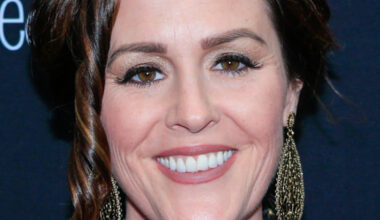
A Snapshot: Basic Information
| Field | Details |
|---|---|
| Full name | Lisa Evancho (née unknown) |
| Date of birth | May 28, 1966 |
| Former spouse | Michael Evancho (married October 1997 — divorced 2019) |
| Children | 4 — Juliet (b. May 1998), Jackie (b. April 9, 2000), Zachary (b. April 2002), Rachel (b. September 2003) |
| Residence | Suburbs of Pittsburgh, Pennsylvania |
| Notable roles | Homemaker, parent-advocate, founder of Brave Heart United |
| Health | Publicly disclosed struggles with Lyme disease |
| Public presence | Low-profile; occasional family appearances, small YouTube channel |
Early Life and Family Foundations
Lisa Evancho was born on May 28, 1966. The early chapters of her life remain largely private—an outline without many inked details—yet her later life reads like a carefully tended garden: roots set deep, the canopy growing outward in the form of four children and a home that became the center of many public stories. In October 1997 she married Michael Evancho, and together they built a household in the Pittsburgh suburbs that would, in time, attract national attention.
Between 1998 and 2003 the family expanded rapidly: Juliet arrived in May 1998, Jackie in April 2000, Zachary in April 2002, and Rachel in September 2003. Four children in roughly five years created a rhythm—schedules, school runs, practices, late-night consolations—where Lisa played a central role. Her life in those years is described chiefly through family activity and caretaking: managing the home, supporting early talents, and keeping the practical engines of a busy household running.
Parenting a Prodigy and an Activist
Raising Jackie and Juliet produced two very different public trajectories that would also define Lisa’s public profile. Jackie Evancho rose to national prominence at age 10 as a contestant on a major television talent show in 2010. That early fame accelerated the family’s transition from private suburb to national spotlight. Lisa became the parent behind the scenes: organizing, attending, and defending choices. Her role was less about red carpets and more about logistics, presence, and emotional anchoring.
Juliet’s path, by contrast, unfolded as a story of identity and civil rights. Born in May 1998, Juliet transitioned publicly in adolescence and became a visible transgender activist. Her 2016 legal challenge to a school bathroom policy pushed the family into political conversation and placed Lisa in the role of advocate and protector. Supporting a child through transition in an often-hostile public climate required steady moral conviction—Lisa offered that conviction.
The family’s public image bears two overlapping narratives: a musical prodigy and a rights-driven activist. Lisa moves between both stories, sometimes visible, often quiet, always supportive. She emerges as a lodestar for practical parenting: making decisions, offering shelter, and aligning family values with action.
Advocacy and Brave Heart United
One of the most concrete offshoots of Lisa’s later life is Brave Heart United, a nonprofit she founded to assist transgender youth in crisis. The organization grew from personal experience—witnessing a daughter’s legal fight and the societal pushback that accompanied it—and from an ethic of hospitality. Brave Heart United’s work includes providing housing and direct support to young transgender people rejected by their families.
This nonprofit role shifted Lisa from private homemaker to community actor. It required new competencies: fundraising, outreach, and the willingness to place the family’s resources into public service. The move was not ostentatious; it was functional and personal. Lisa’s nonprofit work reads as a practical extension of her parenting—taking in a young transgender man, offering him a safe harbor, treating him as family—turning compassion into organized assistance.
Health, Resilience, and Quiet Struggles
Lisa’s public narrative includes her ongoing battle with Lyme disease, an illness she has discussed openly. Chronic health conditions can shape family life in subtle but profound ways: shifting daily routines, adding worry, and strengthening certain bonds while testing others. In interviews and family profiles, Lisa is described as persistent and steady, managing pain or fatigue while continuing to care for the household and her children’s demanding schedules.
Her resilience appears frequently in family descriptions. Jackie has called her mother a “hero,” a short word that carries the weight of daily caregiving, illness management, and emotional labor. These are the small heroics that rarely make headlines but determine the tenor of family life: doctor appointments kept, meals prepared, emotional check-ins, and the patient work of rebuilding after upheaval.
Family Dynamics and Recent Years
After more than two decades of marriage, Lisa and Michael separated in late 2019 and finalized a divorce in 2019. The split was described as amicable and has since been followed by an unusual post-divorce arrangement: a continued commitment to co-parenting and maintaining friendly relations. During the COVID-19 pandemic quarantine in 2020 the family notably chose to isolate together, a decision that emphasized cohesion even amid structural change.
Both parents moved into new partnerships after the divorce. Lisa’s post-divorce partner is a transgender woman, an arrangement that has been framed publicly as an element of the family’s broader acceptance and evolution. Michael’s new partner has a daughter who Jackie refers to as a sister—another example of the family’s blended bonds.
Jackie’s ongoing career—albums, tours, and public appearances—continues to generate attention and income, which added a new layer to the family’s socioeconomic stability in the 2010s and beyond. Yet Lisa’s own public presence remains intentionally low. She runs a modest YouTube channel, posts rarely on social media, and prefers to let her children’s public work occupy center stage. Still, her fingerprints are visible across family milestones and public statements: from defending career decisions to hosting and supporting activism.
Key Timeline
| Year | Event |
|---|---|
| 1966 | Lisa born on May 28. |
| 1997 | Married Michael Evancho (October). |
| 1998 | Juliet born (May). |
| 2000 | Jackie born (April 9). |
| 2002 | Zachary born (April). |
| 2003 | Rachel born (September). |
| 2010 | Jackie’s national breakthrough at age 10. |
| 2016 | Family becomes involved in Juliet’s school policy legal case. |
| 2017 | Family profiled in televised special; public interest intensifies. |
| 2019 | Lisa and Michael divorce; amicable separation announced late 2019. |
| 2020 | Family quarantines together during COVID-19; Lisa’s new partner introduced. |
| 2019–2025 | Lisa focuses on Brave Heart United and private advocacy work; low public profile. |
The Shape of a Life
Lisa Evancho’s public portrait reads like a watercolor: soft edges, layered tones, and family as the brightest color. She is a mother first—a domestic architect who raised four children, stewarded fame and controversy, and translated private conviction into small-scale public action. Her life illustrates how private courage can ripple outward: through a daughter’s music, a child’s legal fight, a nonprofit’s doorway left open. The Evancho family, for all its public moments, revolves around a steady domestic axis—Lisa—who manages the interior life with a quiet but uncompromising hand.