Biographical snapshot
| Field | Information |
|---|---|
| Full name (as requested) | Anna Jang Calderon |
| Birth (public reporting) | Born circa 2012 (public profiles list ~2012) |
| Approximate age (2025) | About 13 years old |
| Parents | Ilia Calderón (mother) and Eugene (Gene) Jang (father) |
| Public profiles | Instagram (managed account, handle: @annajangc), small YouTube channel |
| Public role | Inspiration behind the Jang-Calderón Family Foundation (JCFF); occasional presence in family media |
| Public visibility | Appears in family interviews and social posts; social accounts indicate adult management |
| Notable public touchpoints | Family philanthropy materials, lifestyle/interview pieces about Ilia Calderón, selective video appearances since early childhood |
Family and roots: two cultures, one compass
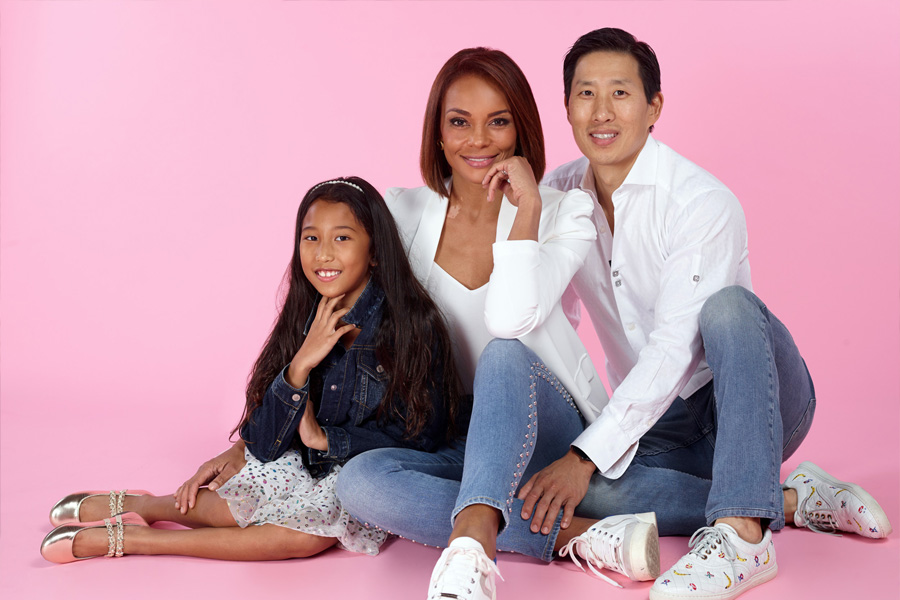
Anna occupies a particular place at the crossroads of cultures. Her mother, a Colombian-born journalist with a national profile, and her father, who brings Korean-American heritage into the household, intentionally raise Anna in a bilingual, bicultural environment. That dual legacy shows up in small but telling ways — in the rhythm of family storytelling, the foods on the table, the languages that thread through daily life. Like a seed planted at the confluence of two rivers, Anna’s upbringing is shaped by currents from both sides of the family.
The family unit publicly presents itself as tight-knit and philanthropic. Anna is consistently described in profiles and family materials as the couple’s only child and as a motivating force behind their charitable work. Her presence — sometimes in photographs, sometimes mentioned in interviews — functions less like a headline and more like a lodestar for family priorities.
Public presence and media footprint
Anna’s public visibility is measured and narrow. She has an Instagram account that explicitly states it is managed by adults, and a modest YouTube channel with creative content. Those platforms are social, not corporate; they show personal moments, creative experiments, and family snapshots rather than a professional biography or a public career.
Quantitatively: her Instagram followers are reported in the tens of thousands on public listings, a number that signals attention without the trappings of celebrity. She appears in occasional video clips and family segments — for example, early childhood celebrations and family-centered interviews — but there are no independent news profiles that treat her as an autonomous public figure. In short: visible, but within clear parental and family boundaries.
The Jang-Calderón Family Foundation: a child as inspiration
A distinctive feature of Anna’s public identity is her role as the inspirational center for the family’s philanthropy. The Jang-Calderón Family Foundation (JCFF) names Anna explicitly as the reason the family focuses on youth-centered giving and programming. That framing turns a private relationship into a public mission: rather than casting a child as a subject of media fascination, the family channels attention into structured charitable work.
Numbers and dates tied to the foundation are publicly modest: the foundation’s materials describe programs and initiatives rather than exhaustive financial breakdowns. The foundation’s narrative style frames Anna as the emotional core — the spark that motivates grantmaking, programming, and community partnerships — without exposing private details about her life.
Timeline of public touchpoints (concise)
| Year | Public touchpoint |
|---|---|
| ~2012 | Birth year commonly cited in public bios. |
| 2013 | Early family video segments and public birthday mentions. |
| Mid-2010s → 2020s | Sporadic appearances in family interviews and lifestyle coverage. |
| 2020s → 2025 | Managed social media presence; continued role as inspiration for JCFF programs. |
This timeline reads like a string of discreet, carefully curated public moments. Each is a pebble dropped into the public pond; ripples are controlled, not waves.
What the public record reveals — and what it doesn’t
The available material paints a clear pattern: Anna is publicly visible mainly as a family figure and the emotional center of philanthropic narratives. What it does not show is independent adult activity. There are no reports of professional employment, public financial disclosures about her as an individual, or detailed personal records released to the press. In other words, the public gaze finds a child in a public family, but not a standalone public persona.
Concretely:
- There are frequent human-interest references to Anna in profiles of her mother and in foundation materials.
- Anna’s social media is active but managed by adults; that label is an explicit boundary.
- No verified professional credentials, businesses, or financial figures are attributable to Anna as an individual.
Those silences are meaningful. They suggest a deliberate boundary: family visibility that protects the child’s private development while allowing a limited public narrative that aligns with the family’s philanthropic work.
A public child, shielded life: privacy in practice
The way Anna is presented illustrates a particular approach to modern family visibility. The family appears to choose a model where selective sharing supports values — cultural pride, charitable purpose, public storytelling — without opening the whole life to scrutiny. Social media posts and interview mentions are curated. A foundation is created and named in ways that spotlight values rather than personal minutiae. The result is a public image that is specific but narrow: clear enough to inspire others, tight enough to preserve a child’s evolving privacy.
Consider the metaphor of a stage with a single spotlight: the family directs public attention, but the rest of the stage — schooling, friendships, private milestones — remains in shadow. That balance is intentional, and it is reflected across the public touchpoints that exist.
Personality sketches from public glimpses
From the angles that are visible, Anna comes across as a creative and curious presence. Her YouTube channel and social posts point to interests in music, photography, and short-form creative expression. She is not presented as a brand or a professional, but as a child exploring artistic channels within a family context that encourages giving back. Those small creative acts, when seen against the backdrop of family philanthropy, take on an emblematic role: a young person discovering interests while serving as a gentle reason for larger family commitments.
Final public posture
Anna Jang Calderon’s public life is a study in contrasts — visible, but contained; inspirational, but private. She exists in public materials chiefly as family, muse, and catalyst: the child at the center of a multicultural home and a family foundation. Her story, at least as reported in public channels, is less about headlines and more about the quiet work of shaping values — the kind that can ripple outward in grants, programs, and conversations about culture and giving.