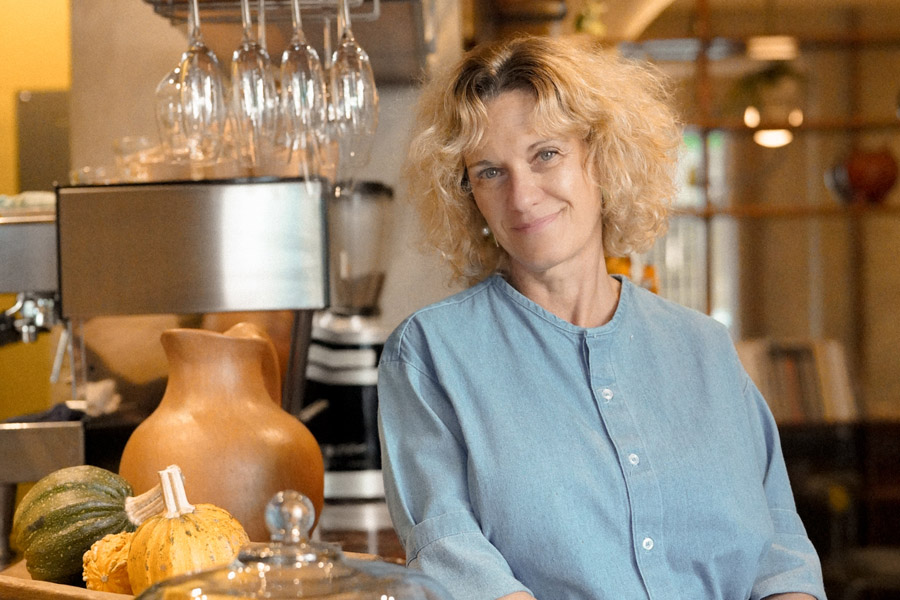
A short portrait
Karen Drijanski moves through a kitchen like someone walking familiar streets: deliberate, observant, and with a small, steady joy. Based in Mexico City, she is best known as the founder and heart of Niddo, a neighborhood café and restaurant that reads like a family album translated into food — pancakes, chilaquiles, slow-baked bread, and breakfasts that feel like home. She runs the project with her son Eduardo and is one of the Drijanski sisters, a family whose public profile includes the chef and television host Pati Jinich. Karen’s work is an exercise in comfort, memory, and simple excellence: the kind of cooking that does not shout but stays with you.
Quick facts
| Field | Information |
|---|---|
| Full name (public) | Karen Drijanski |
| Base | Mexico City, Mexico |
| Primary roles | Chef, restaurateur, entrepreneur |
| Restaurant/Project | Niddo (café/restaurant) |
| Business partner | Eduardo (son) |
| Number of children | 3 (Michelle, Carlos, Eduardo) |
| Media appearances | Podcast profile (2021), TV episode feature (2025) |
| Time lived abroad (notable) | ~12 years in Vancouver; stays in Tuscany and San Antonio mentioned in public profiles |
| Approx. emergence of Niddo | Circa 2018 |
| Public family | Sisters: Pati Jinich, Sharon Drijanski, Alisa (Romano) |
| Publicly missing data | No public record of exact birth date or detailed education history |
The family kitchen as an origin story
Family is not background for Karen — it is scaffolding. The Drijanski household, shaped by grandparents who fled Eastern Europe and by parents who mixed architecture, hospitality, and art, produced a generation comfortable with both design and sustenance. Karen is one of several sisters who turned family memory into public life; Pati Jinich became a national and international culinary voice, while others pursued design, pastry and media. Karen’s contribution has been hands-on and local: making a block of Mexico City feel like home, one plate at a time.
Think of the family as a small constellation: each star distinct but visible from the same vantage point. Karen’s star is lower to the horizon and warmer — not the flash of a television host but the steady light of a neighborhood oven.
Niddo: neighborhood, not novelty
Niddo did not arrive as a polished brand with a corporate plan. It grew like dough left to rise: slowly, patiently, and with attention. Opening around 2018, the café found a rhythm in comfort and repetition. Pancakes that become signature, chilaquiles with a lineage, breads that smell like memory — these are Niddo’s vocabulary.
Operationally, the project is family-run. Eduardo, Karen’s son, is publicly identified as a business partner; together they manage front-of-house decisions, menus that change with seasons and moods, and the small, mundane things that make a restaurant feel lived-in rather than staged. Niddo’s appeal is not flash; it is intimacy. It is the restaurant you would bring someone to if you wanted them to understand the best part of a city, not its trends.
Voice and cuisine: modesty as method
Describing Karen’s cooking as “home” or “soul” food is shorthand that understates its craft. Her plates rely on technique that is invisible — the right pan, the patient simmer, the timing calibrated like a small machine. The result is uncomplicated food that reads as inevitable: pancakes that remember Sunday, chilaquiles that taste of a kitchen where the stove knows you.
Her aesthetic resists extremes. Ingredients are allowed to speak, not forced into gimmicks. In an era when novelty can be a currency, Karen trades in the more durable economies of comfort and repetition. She presents a model of culinary authority that is quiet: influence through consistency rather than spectacle.
Media and moments — dates, numbers, and milestones
| Year | Event |
|---|---|
| ~2018 | Niddo emerges as a visible café/restaurant project in Mexico City. |
| 2019–2022 | Increased press coverage and profiles in food and lifestyle outlets. |
| 2021 | Featured on a long-form podcast profile; video/audio content distributed across platforms. |
| 2023–2025 | Continued media mentions; inclusion in pieces about women chefs and Mexico City food culture. |
| 2025 | Featured in an episode titled “For Love and Family” (television episode) that includes a visit to Niddo. |
These milestones are not medals so much as markers of attention: podcast deep dives, magazine features, and a television episode that foregrounds family. The arc is steady: from neighborhood favorite to a name that occasionally appears in national narratives about food and identity.
The human mathematics: family, partnership, movement
Numbers can feel cold, yet they map a life: three children; roughly a dozen years spent in Vancouver; a handful of international stays (Tuscany, San Antonio); a restaurant concept that became public around 2018. Behind each number is a pattern — the way transnational movement informed a kitchen, the way motherhood folded into entrepreneurship, the way siblings created a constellation of influence across cooking, design and media.
Karen’s public life is shaped less by solitary ambition than by relational economies. Her sister Pati’s visibility amplified attention toward Niddo; Karen’s own presence turned that attention into the warmth of a real table. She is an elder-sister figure in both literal and figurative senses: older, steady, quietly shaping the next generation (her son Eduardo included) in the craft of daily hospitality.
Portrait in practices
A few practical notes sketch how she works: she values baked goods and breakfast fare as cultural carriers; she frames recipes as memories rather than inventions; she runs a project with family at its core; and she appears in media with a calm directness rather than performative flourish. These aren’t quirky details; they are the architecture of a practice that makes people return.
Karen’s kitchens are both a repository and a compass. They hold ancestral flavors while guiding contemporary palates back toward the pleasures of simple, well-executed food.
The rhythms of attention
Public attention to Karen’s work has been episodic rather than viral. Coverage tends to cluster around a few seasons: the early growth of Niddo, a 2021 podcast profile, and continued mentions through 2025 tied to family narratives and features about women chefs. The narrative arc is not meteoric. It is a slow-building, human-sized recognition — like a loaf finishing its final rise in the warmth of a forgiving oven.